


The "working range" of a robot is the distance that the robotic arm can reach when fully extended, also known as arm length. The scope of work is also known as the workspace. It refers to the space that a robot can reach without installing an end effector, serving as a reference point on the wrist. The working area should be excluded from the scope of work. Robots may cause collisions and interference when moving, and even in actual use, the possibility of collisions should be considered after installing the end effector.
The working range of industrial robots
The working range of industrial robots refers to the spatial area that the robot arm or hand installation point can reach. Because the size and shape of the hand end effector are diverse, in order to truly reflect the characteristic parameters of the robot, this refers to the working area when the end effector is not installed.
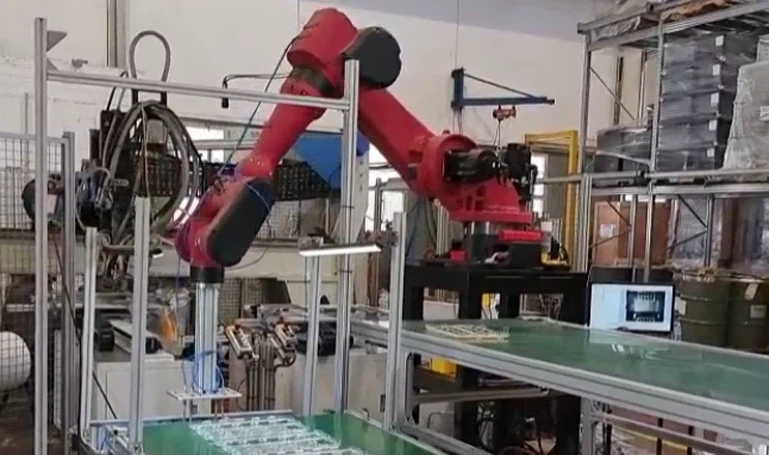
The shape and size of the robot's working range are very important, and the robot may be unable to complete work tasks due to the presence of a dead zone that cannot be reached by its hands when performing tasks. The number of degrees of freedom a robot possesses determines its motion pattern through machine combinations; The variation of degrees of freedom (i.e. the distance of linear motion and the magnitude of rotation angle) determines the size of the motion graph.
What can industrial robots do?
Industrial robots, as the name suggests, are robots used for industrial production. This is the era of emerging industries, and the use of industrial robots is a progress in industrial production. So what can industrial robots do?
Industrial robots are responsible for palletizing and handling in production workshops, as well as loading and unloading robots, spraying robots, welding machine robots, and so on.
Mechanical processing applications: The application of robots in the mechanical processing industry is not high, accounting for only 2%, probably because there are many automation equipment on the market that can handle mechanical processing tasks. The main application fields of mechanical processing robots include part casting, laser cutting, and water jet cutting.
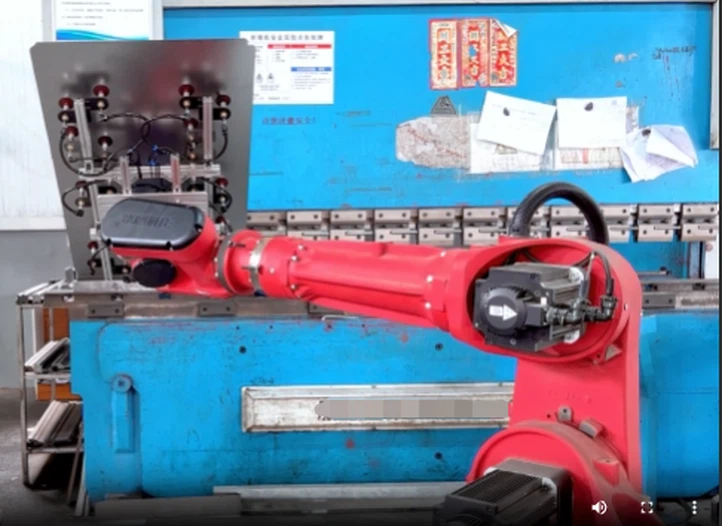
Robot spraying application: The robot spraying here mainly refers to painting, dispensing, spraying and other work, with only 4% of industrial robots engaged in spraying applications.
Robot assembly application: Assembly robots are mainly engaged in the installation, disassembly, and repair of components. Due to the rapid development of robot sensor technology in recent years, robot applications have become increasingly diverse, directly leading to a decline in the proportion of robot assembly applications.
Robot welding applications: Robot welding applications mainly include spot welding and arc welding used in the automotive industry. Although spot welding robots are more popular than arc welding robots, arc welding robots have developed rapidly in recent years. Many processing workshops are gradually introducing welding robots to achieve automated welding operations.
Robot handling application: Currently, handling is still the largest application field of robots, accounting for about 40% of the total robot application. Many automated production lines require the use of robots for loading, unloading, handling, and stacking operations.