

Can large handling robots be used for palletizing tasks?
In the dynamic landscape of modern industry, the quest for efficiency, precision, and cost - effectiveness has led to the increasing adoption of large handling robots. As a leading supplier of large handling robots, I am often asked about the feasibility of using these powerful machines for palletizing tasks. In this blog post, I will delve into the capabilities, advantages, and considerations of using large handling robots in palletizing operations.
Capabilities of Large Handling Robots
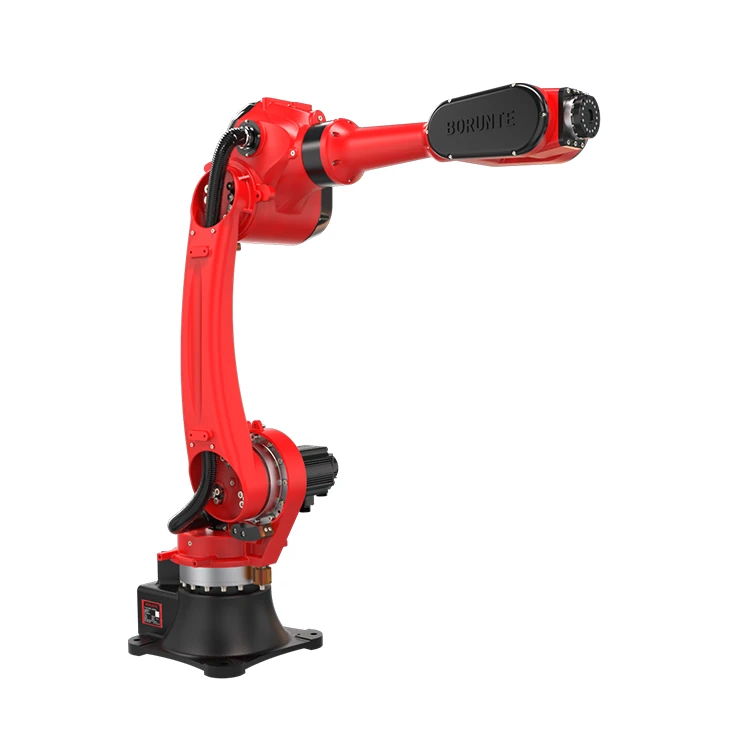
Large handling robots are engineered with high - strength materials and advanced servo - motor systems, enabling them to lift and move heavy loads. These robots typically have a large working range, which is essential for covering the area required for palletizing on different pallet sizes and configurations.
For example, our Three Meter Arm Industrial Robot is equipped with a long reach arm that can easily access different positions on a pallet. This long reach allows the robot to stack products on pallets precisely, whether they are arranged in a single layer or multiple layers. In addition, large handling robots are often equipped with six or more axes of movement, providing the flexibility needed to manipulate products into the desired orientation for palletizing.
The precision control systems of these robots ensure that the products are placed accurately on the pallet. Sensors integrated into the robot's end - effector can detect the position and orientation of the products, making adjustments in real - time to ensure optimal stacking. This is particularly important when dealing with fragile or irregularly shaped products.

Advantages of Using Large Handling Robots for Palletizing
1. High Efficiency
Large handling robots can operate at a much faster pace than manual labor. They do not require breaks, sleep, or rest, ensuring continuous production. In a typical palletizing operation, a large handling robot can complete the stacking of a pallet in a fraction of the time it would take a human operator. This increased speed leads to higher production rates, allowing companies to meet growing market demands.
2. Consistency and Quality
Manual palletizing is prone to errors due to human fatigue, distraction, or variability in skill levels. In contrast, large handling robots perform the same task with precise repeatability. Each product is placed at the exact same position and orientation, ensuring that the pallets are consistently stacked. This reduces the risk of product damage during storage and transportation and enhances the overall quality of the palletized goods.
3. Safety
Palletizing heavy products can be physically demanding and dangerous for human workers. There is a risk of back injuries, strains, and accidents when lifting and moving heavy loads. Large handling robots eliminate these risks by taking over the strenuous tasks. This not only improves the safety of the workforce but also reduces the potential for workers' compensation claims and downtime due to injuries.
4. Adaptability
Large handling robots can be easily programmed to handle different types of products and palletizing patterns. Whether it is a single product type or a mixed - case palletizing task, the robot can be reconfigured through software programming. For instance, our Wide Usage Six Axis Robot can be programmed to adjust to changes in product size, shape, and weight, making it a versatile solution for various palletizing needs.
Considerations for Using Large Handling Robots in Palletizing
1. Initial Investment
The purchase and installation of large handling robots require a significant upfront investment. This includes the cost of the robot itself, programming, integration with existing production lines, and safety equipment. However, it is important to consider the long - term benefits, such as increased efficiency and reduced labor costs, which can offset the initial expenditure over time.
2. Programming and Maintenance
Operating large handling robots requires specialized knowledge in programming. Companies may need to train their existing staff or hire new employees with programming skills. Additionally, regular maintenance is essential to ensure the reliable operation of the robots. This includes routine inspections, lubrication, and replacement of worn - out parts.
3. Space Requirements
Large handling robots typically take up more space compared to manual palletizing stations. Adequate floor space is needed to accommodate the robot's working range, maintenance access, and safety fencing. Companies need to carefully plan their factory layout to ensure that there is sufficient space for the robot without interfering with other production processes.
Real - World Applications and Case Studies
In the food and beverage industry, large handling robots have been widely used for palletizing cases of beverages, cans, and food products. For example, a large - scale brewery uses our Six - axis Stamping Robot to palletize cases of beer. The robot can handle multiple cases at once, and its high - speed operation ensures that the brewery can meet its daily production targets.
In the automotive industry, large handling robots are used for palletizing engine components and body parts. These components are often heavy and require precise handling to avoid damage. Our High Protection Grade Industrial Robot, with its high - protection design, is suitable for working in the harsh environment of automotive manufacturing plants and can safely and accurately palletize these components.
Conclusion
In conclusion, large handling robots are well - suited for palletizing tasks. Their capabilities in terms of strength, reach, precision, and flexibility make them a powerful tool for improving efficiency, quality, and safety in palletizing operations. Although there are some considerations, such as initial investment and programming requirements, the long - term benefits far outweigh the challenges.
If you are interested in exploring how our large handling robots can enhance your palletizing operations, we invite you to contact us for a detailed consultation. Our team of experts will work with you to understand your specific needs and provide a customized solution.
References
- "Industrial Robotics: Technology, Programming, and Applications" by Peter Corke.
- "Automation in Manufacturing: Fundamentals and Applications" by Mikell P. Groover.
- Industry reports on the use of large handling robots in palletizing from leading research firms.