


Recently, the International Federation of Robotics (IFR) released a report showing strong growth in the North American robot market in 2022, with a total installation of 41624 industrial robots in the manufacturing industry, a year-on-year increase of 12%.
The automotive industry is the main application field of industrial robots, with companies in the United States, Canada, and Mexico installing a total of 20391 industrial robots, an increase of 30% compared to 2021.
Marina Bill, president of the International Federation of Robots (IFR), said: "North America is the world's second largest market for industrial robots after China. The United States, Canada and Mexico are the main application markets for robot automation growth, while the automotive industry is in a leading position."
In the United States, demand from automakers and component manufacturers increased by 48% in 2022, showing a cyclical demand pattern that rebounded after several years of contraction, dropping from a peak of 15397 units in 2017 to 9854 units in 2021, and then surging to 14594 units in 2022.

40% of Canada's industrial robots are installed in the automobile industry, so the number of installed robots largely depends on the investment in the automobile industry in that year. In 2022, its automobile sales dropped by 36%. Therefore, only 1258 industrial robots were installed in the automobile industry, which is lower than the level of 1897 in 2019 before the popularity of COVID-19. The installation of industrial robots for automotive components has significantly decreased by 45%, with only 995 units, while sales of engines, vehicles, and other products have increased by 99%, with 263 units installed.
The installation of industrial robots in Mexico is also determined by the automotive industry, which accounts for 66%. In 2022, it increased by 16% to 4222 units, which is the second best performance since the record high of 4805 units in 2017
In addition, in the non automotive industry, other industries with over 4000 industrial robots installed in the North American market include the electronics and electrical industry, which increased by 28%; The metal and machinery industry, down 9%; There is also the plastic and chemical product industries, which have decreased by 4%, each accounting for 9% of the market share of industrial robot installation in 2022.
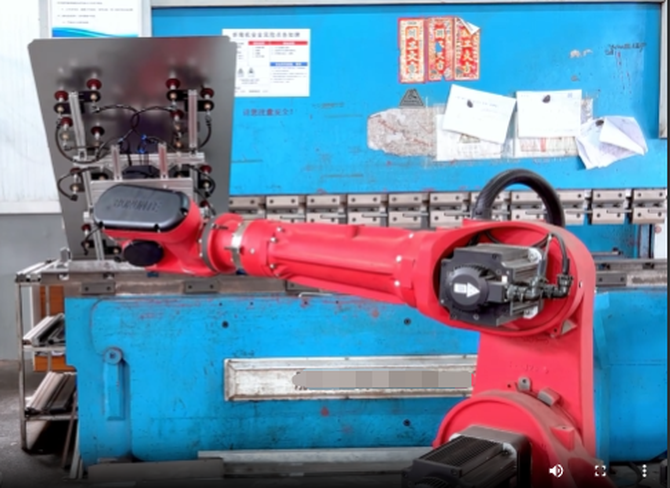
Expanding demand for industrial robots in the United States
In 2022, the demand for industrial robots in the US automotive industry increased significantly. According to the Advanced Automation Association of the United States, more than half of the orders last year came from car companies. According to statistics, since the high-profile announcement of support for electric vehicle policies in 2021, the investment in new electric vehicles, batteries, and recycling factories has reached 160 billion US dollars.
The most direct reason for the significant purchase of robots is the increasingly severe labor shortage problem in the United States. Over the past year, the unemployment rate in the United States has continued to decline, and in the latest January non farm data, the unemployment rate has reached its lowest point since 1969.
Jeff Bernstein, Chairman of the Advanced Automation Association of the United States, stated that there seems to be no signs of easing labor shortages in the market. Faced with the lowest unemployment rate since 1969, many companies are using automation as a quick solution to their problems. In addition, due to concerns about supply chain issues, some companies have added additional orders to ensure they can obtain the parts they need.
The impact of the COVID-19 epidemic on the U.S. labor market was greater than expected and lasted longer than expected. Data from the U.S. Department of Labor showed that by December 2022, the number of non farm job vacancies in the United States had reached 11.012 million, with a job vacancy rate of 6.7%. Obviously, the labor force gap in the United States is already serious.

The persistent labor shortage has led to a sharp increase in wages in the United States. According to data from the Department of Labor, labor costs in the United States jumped by 5.7% in 2022, the largest annual increase since 1982. Labor shortages and rising labor costs have forced companies to consider using robots to replace workers.
In fact, there are not many robots currently used in the United States, with a manufacturing robot density of only 274 units, lower than Chinese 322 units, ranking ninth in the world. This may have surprised many people's expectations, but on the other hand, it also indicates that there is still a lot of room for growth in the robot market in the United States, and the ongoing labor shortage problem is not just an opportunity.