

In today's rapidly evolving industrial landscape, flexible robots have emerged as a revolutionary force, offering unparalleled adaptability and efficiency. As a leading supplier of flexible robots, I've witnessed firsthand the transformative impact these machines have on various industries. In this blog, I'll delve into the cost - effectiveness of flexible robots, exploring how they can provide significant long - term savings and enhance productivity.
1. Initial Investment vs. Long - Term Savings
When considering the cost - effectiveness of flexible robots, the initial investment is often a major concern for businesses. However, it's crucial to look beyond the upfront cost and evaluate the long - term benefits. Flexible robots typically have a higher initial price tag compared to traditional, less adaptable robots or manual labor. But this investment can be quickly offset by the savings they generate over time.
For instance, flexible robots can perform a wide range of tasks without the need for extensive retooling. This means that a single robot can handle multiple production processes, reducing the need to purchase and maintain separate machines for each task. Consider a manufacturing plant that needs to assemble different types of products. With a flexible robot, it can easily switch between product lines, eliminating the costs associated with reconfiguring dedicated assembly lines.
Moreover, flexible robots are designed to be more energy - efficient. They can operate with precision, using only the necessary amount of power for each task. This results in lower energy bills, which can contribute to substantial savings over the robot's lifespan.
2. Increased Productivity and Reduced Labor Costs
One of the most significant advantages of flexible robots is their ability to boost productivity. These robots can work around the clock without breaks, fatigue, or the need for overtime pay. They can perform tasks at a consistent speed and with high precision, reducing the number of defective products and rework.
In a production environment, labor costs can be a significant portion of the overall expenses. By automating tasks with flexible robots, businesses can reduce their reliance on human labor. For example, in a pick - and - place operation, a flexible robot can handle a large number of items per hour, far more than a human worker. This not only increases the output but also frees up human workers to focus on more complex and value - added tasks, such as quality control and process optimization.
3. Adaptability to Changing Production Requirements
In today's dynamic market, production requirements can change rapidly. New product designs, variations in demand, and evolving industry standards all necessitate a manufacturing system that can adapt quickly. Flexible robots excel in this regard.
They can be easily reprogrammed to perform different tasks or accommodate changes in product specifications. For example, if a company decides to introduce a new product line, a flexible robot can be reconfigured to handle the new assembly or processing requirements. This adaptability reduces the time and cost associated with retooling and re - training, allowing businesses to respond quickly to market changes and stay competitive.
4. Quality Assurance and Consistency
Flexible robots offer a high level of quality assurance. They can perform tasks with a high degree of accuracy and repeatability, ensuring that each product meets the same quality standards. This consistency is difficult to achieve with manual labor, where human error can lead to variations in product quality.
By reducing the number of defective products, businesses can save on the costs associated with rework, scrap, and customer returns. In addition, high - quality products can enhance a company's reputation in the market, leading to increased customer satisfaction and potentially higher sales.

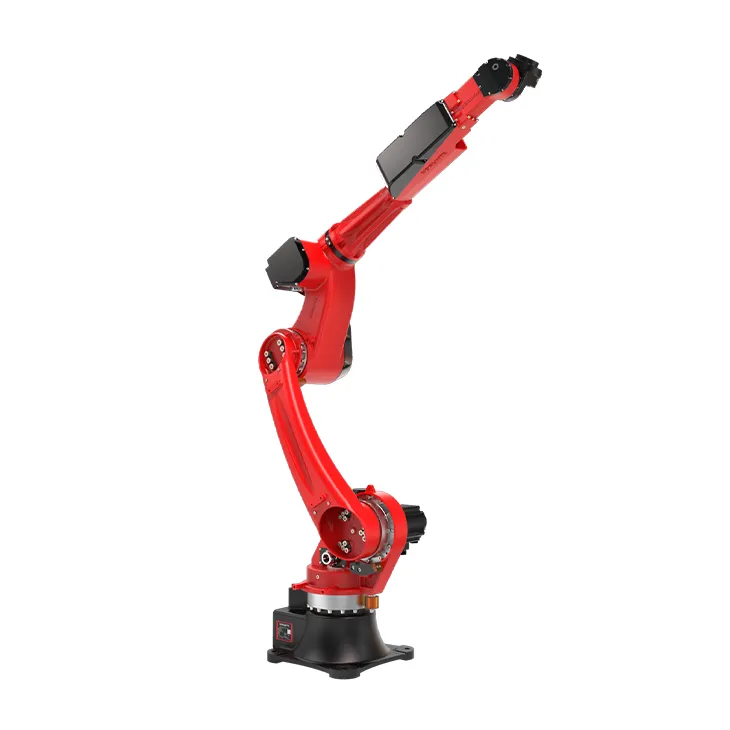
5. Our Range of Flexible Robots
As a flexible robot supplier, we offer a diverse range of robots to meet the specific needs of different industries. Here are some of our featured products:
- Multifunctional six axis robot for manufacturing: This robot is designed for a variety of manufacturing tasks, offering high flexibility and precision.
- Hollow Arm Design Industrial Robot: The hollow arm design allows for easy cable routing, making it ideal for applications where space is limited.
- Long Span Industrial Welding Robot: With a long reach, this robot is perfect for welding large - scale components.
- High Protection Six Axis Robot: It offers high - level protection against dust, moisture, and other environmental factors, ensuring reliable operation in harsh conditions.
- Long Arm Span Welding Robot: This robot is designed for welding applications that require a long arm span, providing greater flexibility in reaching different parts of the workpiece.
6. Contact Us for Purchase and Consultation
If you're interested in exploring the cost - effectiveness of flexible robots for your business, we're here to help. Our team of experts can provide you with detailed information about our products, conduct a cost - benefit analysis for your specific application, and offer customized solutions to meet your production needs.
Whether you're a small - scale manufacturer looking to automate a single process or a large - scale enterprise seeking to optimize your entire production line, our flexible robots can provide the cost - effective solution you're looking for. Don't hesitate to reach out to us to start a discussion about how our flexible robots can transform your business.
References
- "Robotics in Manufacturing: Trends and Challenges" by John Smith, published in the Journal of Industrial Automation.
- "The Economics of Flexible Automation" by Jane Doe, presented at the International Conference on Manufacturing Technology.
- "Flexible Robots: Design and Applications" by Robert Johnson, a research report from the Institute of Robotics and Automation.