


Commissioning of industrial robots
The installation of the robot is carried out on the site, and the real production and operation environment will be affected by space utilization and other aspects, resulting in a lot of pose restrictions of the robot, which will easily lead to vibration, displacement and other phenomena in the actual work of the industrial robot, and ultimately lead to the industrial robot can not operate at the designed speed. Therefore, after the installation of the industrial robot, before the actual production work, It is very important to conduct on-site commissioning and calibration. Specifically, the commissioning work mainly includes the following two aspects.
1. Zero commissioning of each axis of the industrial robot
After the robot is installed and delivered from the factory, all axes of the industrial robot may not be zeroed. If such a robot is directly put into production, the center of gravity of each axis may not be accurately fixed on the support point, which may lead to tilt during the production process. This will not only affect normal industrial production, but also may endanger the life safety of workers. Therefore, it is very necessary to zero debug all axes of the industrial robot. In general, each axis arm of the industrial robot will leave a mark of zero return. Simply operate each axis to return to this position, which means that each axis has been debugged to zero. In addition, the base of the robot will also be labeled with the corresponding angles of the six axes of each axis origin, which are important reference for debugging. However, the specific debugging still needs to make specific analysis according to the on-site environment and the tasks to be completed. For example, in this process, the relevant debugging personnel can specifically plan a reasonable zeroing "route", then move the robot to each point in turn through the teaching pendant, and then record the relevant data. Finally, the debugging personnel combine their own proofreading experience to repeat the experiment, All axes of the industrial robot shall be zeroed and debugged according to the actual production requirements.
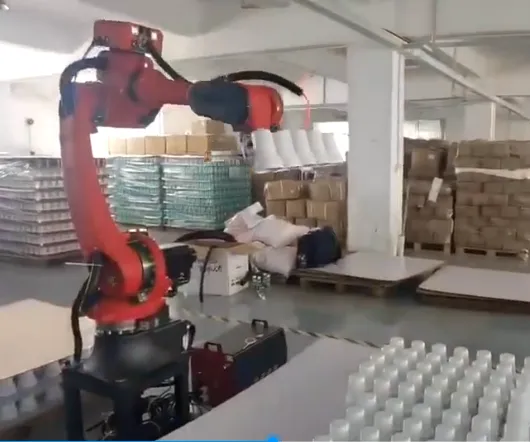
2. Signal processing and debugging of industrial robot
The modern industrial robot of this improved version can operate automatically according to the specified principle program in the way of artificial intelligence. For example, it can complete the running track specified by the signal command according to the received signal, so as to quickly adapt to the new environment. The industrial robot system is not used alone. In the process of putting the industrial robot into production, it must be connected with other peripherals, and the signals on these peripherals must be connected with the signals of the industrial robot system through CC link. Therefore, it is very necessary to debug the signal processing of industrial robots after they are installed and delivered from the factory and before they are put into actual production. Specifically, CC link needs to be set during commissioning, but it should be noted that the CC link signal set by the commissioning personnel must be consistent with the model, master station, slave station and station information of PCC. At the same time, after signal setting, all signals need to be tabulated and commented during PLC programming. After such signal commissioning, the industrial robot can be officially put into production.
