


"Made in China 2025" has planned the strategic goal of making China a manufacturing power, and intelligent manufacturing has become the top priority of industrial manufacturing transformation. Under the trend of intelligence, the downstream application fields of intelligent equipment are accelerating expansion, and the development of industrial robots is expected.
Industrial robots refer to multi joint robotic arms or multi degree of freedom machine devices that can intelligently work under human control and perfectly replace human labor on production lines. Compared to human resources, industrial robots have the characteristics of low cost, high efficiency, and 24-hour work. In recent years, with the continuous increase in domestic labor costs, the labor advantage of Chinese manufacturing industry is not obvious, and the manufacturing industry urgently needs to transform towards intelligence. Industrial robots are showing a strong development trend.

However, due to a lack of core technology, Chinese industrial robot consumption heavily relies on foreign enterprises, especially in core components such as reducers, servo motors, and controllers. Local robot companies in China are constrained by human factors and can only purchase expensive foreign equipment. This requires domestic industrial robot manufacturers to continuously improve their technology, increase their research and development level, and quickly break free from the control of foreign robot brands over the Chinese industrial robot consumption market.
Considering that the current density of industrial robots in the global manufacturing industry is 55, while the density of industrial robots in China is only 21, far lower than that of developed countries such as Japan, South Korea, Germany, and the United States. In the context of intelligent manufacturing, the policy of "machine replacement" is constantly implemented, and there is still great room for growth in Chinese industrial robot market in the future. Conceptual companies such as Huichuan Technology, Robotics, Zhiyun Co., Ltd., Keyuan Co., Ltd., and Qinchuan Machine Tool Co., Ltd. will achieve good development under the dividend of robots.
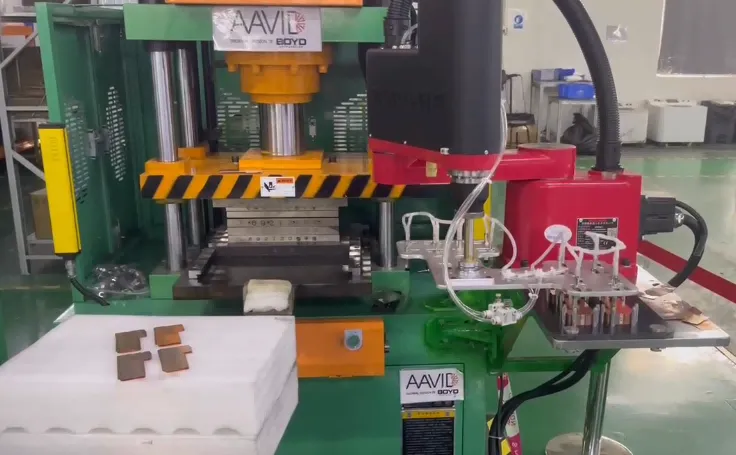
Industrial robots are divided into the following categories according to their driving methods:
(1). Pneumatic industrial robots
This kind of industrial robot uses compressed air to drive the manipulator. Its advantages are convenient air source, rapid action, simple structure, low cost, and no pollution. Its disadvantages are that the air has compressibility, resulting in poor stability of the working speed. Also, because the air source pressure is generally only about 6kPa, this kind of industrial robot has a small lifting force, usually only tens of Newtons, and the maximum is more than a hundred Newtons.
(2). Hydraulic industrial robot
Hydraulic pressure is much higher than pneumatic pressure, usually around 70kPa, so hydraulic transmission industrial robots have great gripping ability, up to thousands of Newton. This type of industrial robot has a compact structure, stable transmission, and sensitive movement, but it requires high sealing requirements and is not suitable for working in high or low temperature environments.

(3). Electric industrial robot
This is currently the most commonly used type of industrial robot, not only because there are many types of electric motors that provide multiple choices for industrial robot design, but also because they can use various flexible control methods. In the early days, stepper motor drive was commonly used, and later DC servo drive units were developed. Currently, AC servo drive units are also rapidly developing. These driving units either directly drive the operator or decelerate and drive through devices such as harmonic reducers, with a very compact and simple structure.