


Automated Guided Vehicles (AGV) are rapidly becoming a must-have in logistics operations. The significance of AGV technology is expected to grow in the coming years, thanks to technological advancements and growing demand for automation.
AGVs are typically used in material handling and transportation, making them ideal for businesses with high-volume and repetitive operations. The application of AGV technology in manufacturing industries, warehouses and distribution centers has been growing steadily, with market projections indicating that the industry will surpass USD 7 billion by 2024.
As the demand for AGV technology continues to grow, businesses are investing heavily in research and development to improve these machines’ functionality and create AGVs that are capable of handling more complex and varied tasks. This article examines some of the future developments of AGV technology that can revolutionize automation and logistics as we know it.
1. Increased Autonomy - Self-Driving AGVs
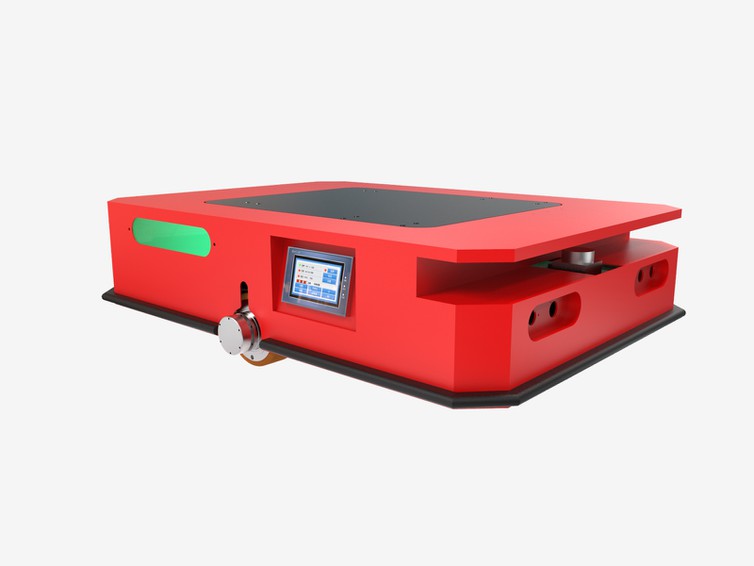
One of the most significant developments in AGV technology is the realization of fully autonomous vehicles that can operate without human intervention. Autonomous vehicles are already a reality in the automotive industry, and the logistics industry is predicted to follow suit.
Autonomous AGVs do not require human operators or even an explicit map to navigate their environment. They use a combination of sensors, cameras, and machine learning algorithms to create maps of their surroundings and identify obstacles, thus avoiding any collisions. The application of autonomous AGVs has the potential to increase productivity, improve accuracy, and reduce costs.
2. Smarter Routing to Optimize Efficiency
AGVs are typically designed to operate along predefined routes, which limits their flexibility and adaptability. However, recent developments in AGV technology are aimed at creating AGVs that can dynamically select routes based on their current situation, environment, and task requirements.
These smarter AGVs can optimize the time required to complete the task by selecting efficient routes, reducing delays caused by congestion, and improving material flow. This optimization can also reduce energy consumption, thus making AGVs more sustainable and environmentally friendly.
3. Enhanced Human-Machine Interaction
The integration of AGVs into a company's workflow can lead to increased productivity, but this requires seamless communication and cooperation between the machine and human operators. Future AGV developments are aimed at enhancing the human-machine interaction, thus making the operation of AGVs more intuitive and efficient.
Efforts are being made to create AGVs that have a natural language processing ability that can interpret and respond to voice commands. Other developments include the integration of augmented reality (AR) technology that can be used to guide operators in AGV operation, train new employees, and increase safety in the workplace.
4. Artificial Intelligence and Machine Learning
Artificial intelligence (AI) is an ever-evolving technology that is increasingly being used in AGV development. Machine learning algorithms can be trained to help AGVs improve their decision-making and problem-solving capabilities. This can help AGVs adapt to the changing environment, improving efficiency and reducing costs for the business.
For example, AGVs could be programmed to recognize the patterns in the warehouse and identify the optimal route for transportation or material handling. Furthermore, the AI's ability to predict and plan can help identify potential breakdowns and schedule preventive maintenance, reducing unscheduled downtime.
5. Integration of Big Data and the Internet of Things (IoT)
The integration of Big Data and IoT technology can help companies analyze and optimize their supply chain processes continuously. By collecting and analyzing data from sensors embedded in AGVs, companies can identify bottlenecks in their processes and adjust them accordingly.
Data analytics can also be used to identify patterns in AGV operations, which can help optimize route selection, material handling, and inventory management. The IoT can also help companies track and manage AGV operations remotely, reducing the need for on-site personnel.
Conclusion
The future of AGVs is exciting, with new developments aimed at increasing autonomy, efficiency, and sustainability. The integration of AI, machine learning, IoT, and Big Data will help businesses to optimize their supply chain, reduce costs and increase efficiency. Moreover, AGVs will become more versatile and useful as they are adapted to handle more complex and varied materials.
The industry's ability to embrace these revolutionary developments will go a long way in determining the AGV technology's future trajectory. Businesses should ensure they capitalize on the recent AGV technology developments to remain competitive and efficient in the dynamic and ever-changing logistics industry.