


Today, as end customers resume their long delayed industrial automation projects, we see a strong rebound in 2021. After 2021, although the activity will not be so crazy, Interact Analysis predicts that it will continue to maintain a strong growth, especially because the experience of operating factories while maintaining Social distancing has made even the most conservative production line managers seriously consider the potential provided by automation.
By 2024, the industrial and collaborative robots (cobots) market will reach a peak revenue of $10.5 billion in 2018, with shipments of 410,000 units.
1. Strong growth of collaborative robots
With the rapid development of collaborative robot technology, there are more and more industries where collaborative robots can be deeply empowered. It can be used in production environments such as coal mines, petroleum and petrochemical industries, civilian and military explosives, spraying, etc., where there are flammable, explosive, and combustible dust.

Before we fully understand the field of robotics components, we must first examine the constantly changing industrial and collaborative robotics fields. In 2020, articulated robots accounted for nearly 75% of the total market value of industrial and collaborative robots at $8.6 billion. But by 2025, Interact Analysis predicts that this share will decline to 70%, while the merged market itself will exceed $11.1 billion.
The reason for the decline is that the revenue of the automotive industry, the largest end user of joint robots, will decrease from 33.4% of the total market share in 2020 to 31.8% in 2024.
The overall industrial robot market is expected to grow at an annual rate of 4% -5%, and the collaborative robot field is expected to grow by 15% -20% year-on-year. In Interact Analysis, as the electronics industry continues to achieve automation and emerging industries such as battery manufacturing and PV manufacturing continue to emerge, we see a production trend for small, low load robots.
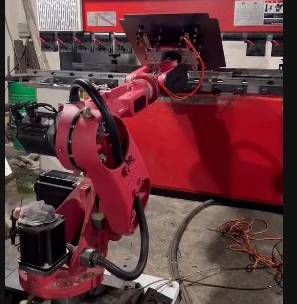
2. By 2025, it is expected that revenue will reach 9.3 billion US dollars
In the latest Interact Analysis industrial robot component research, all key robot components are considered - motors, drivers, gearboxes, controllers, machine vision, sensors, and end effectors.
In 2021, robot components experienced a strong double-digit rebound, surpassing the market size of slightly less than $8 billion in 2018. This is largely due to various factors such as semiconductor shortages and inflation forcing prices to rise. For 2022 and beyond, we expect a low but still strong level of growth, with a compound annual growth rate of 4.1% by 2025 and an expected revenue of $9.3 billion for the year.
End effectors represent the largest single component market and will continue to do so for the foreseeable future, with market value increasing from $1.8 billion in 2020 to over $2.5 billion in 2025. It is expected that the value of motors, drives, and gearboxes will exceed the end effector market.
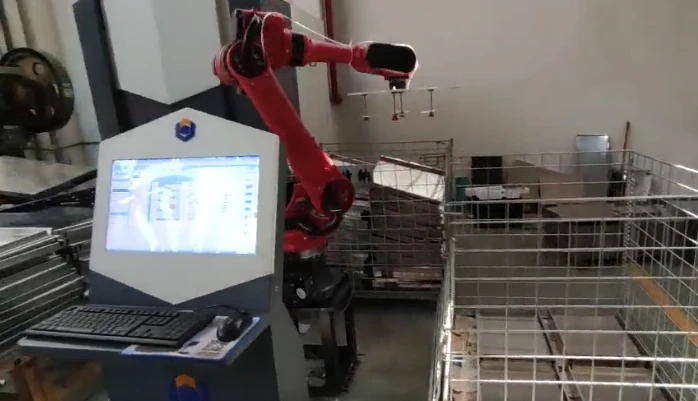
But there is an important point here: most motor/driver markets are exclusive, and robot manufacturers typically produce these components for themselves. The same applies to robot controllers. But the market for other components, including end effectors, teaching aids, sensors, and precision gearboxes, is much more open to third-party suppliers.
Although the field of articulated robots seems to represent the largest single opportunity for component suppliers in terms of scale, a significant portion of the market is captive, with suppliers having strong and even unbreakable connections with their end customers.
Due to the increasing complexity of automation solutions installed in manufacturing facilities, the penetration rate of machine vision and end effectors continues to increase, resulting in their fastest growth rate. Interact Analysis also found that the growth in sensor market share is slightly higher than the average level, as more complex and cost-effective absolute encoders are increasingly being used in applications that require high precision.
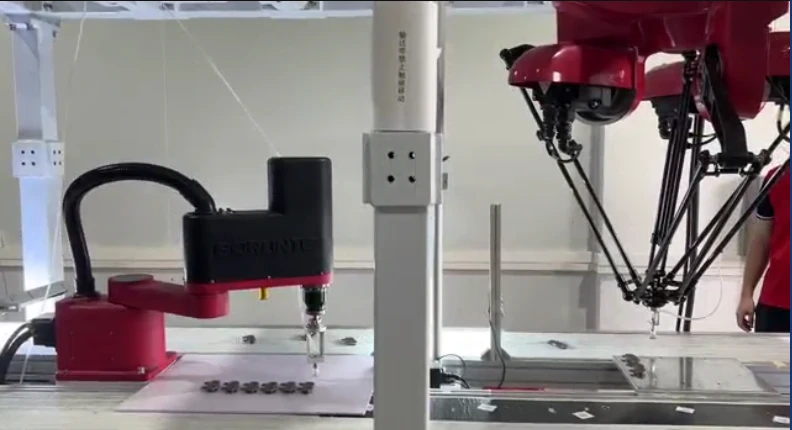
The trend towards more compact and lighter loaded robots is creating a demand for smaller and lower power motors, drives, and gearboxes, with lower market prices compared to larger and more powerful similar products. Although these components will continue to dominate their combined market share, their revenue growth rate will be slower than other types of components. At the same time, the robot controller market is expected to keep pace with the entire industrial robot market, and the deployment of teaching aids, which have already established themselves in the field of collaborative robots, may slightly increase in other robot applications.
3. Targeting "open" segmented markets
Due to its scale, the joint robot field represents the largest market opportunity for robot component suppliers. However, a large part of the joint robot market is captive, and suppliers have strong and even unbreakable connections with their customers. Therefore, component manufacturers committed to expanding market share should pay more attention to the "open" market opportunities provided by the emerging collaborative robot market, which is expected to exceed $1.1 billion in revenue by 2025 and even exceed the $865 million revenue generated by SCARA robots.